

Introduction
College life in the US is a mix of excitement, freedom, and, let’s be honest, a bit of chaos. Between lectures, club meetings, assignments, part-time jobs, and late-night hangouts, it’s easy to feel overwhelmed.
But here’s the truth: you don’t need to survive on caffeine and cramming to excel. With the right study hacks, you can study smarter, retain information longer, and still have time to enjoy college life.
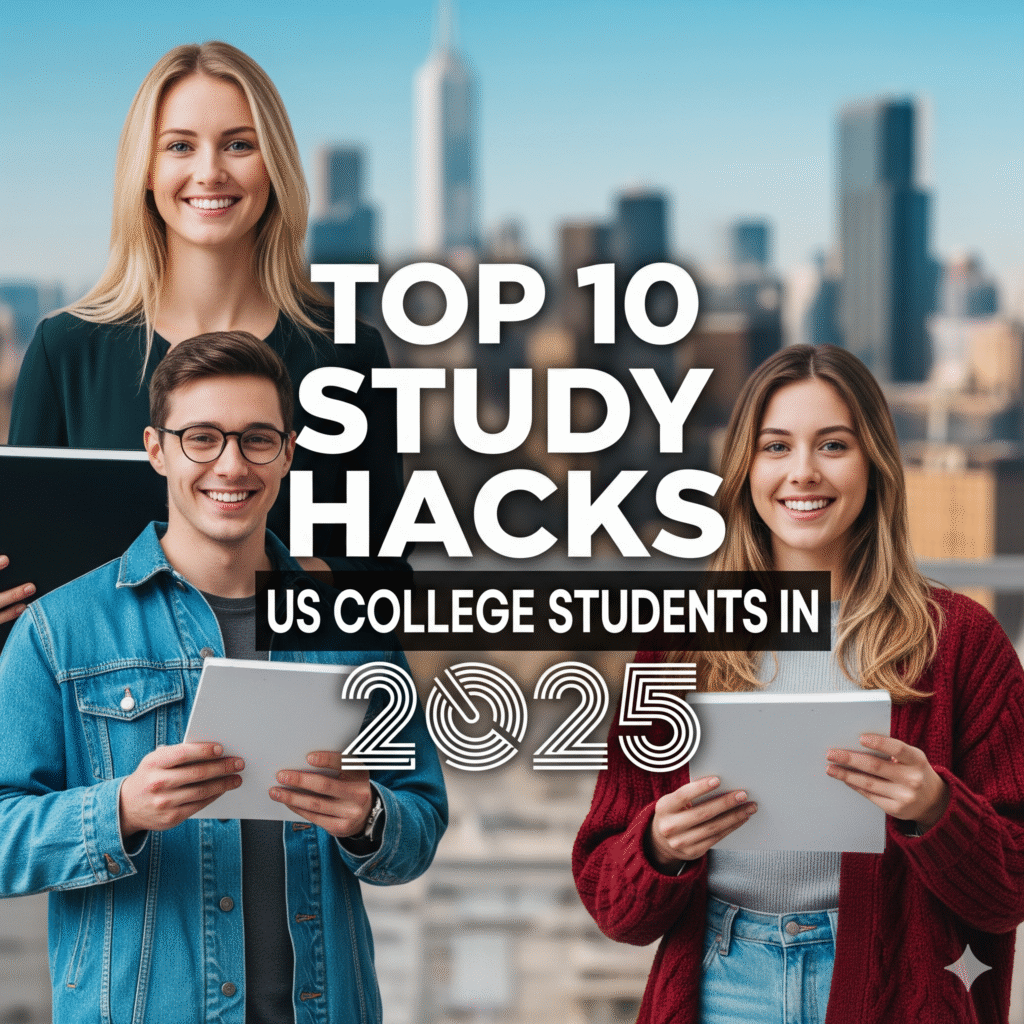
In this guide, we’re diving into the Top 10 Study Hacks for US College Students in 2025 — tips that are practical, realistic, and actually usable in today’s busy student lifestyle.
Hack #1: Master the Pomodoro Technique
The Pomodoro Technique is perfect for students who get easily distracted.
- Study for 25 minutes straight
- Take a 5-minute break
- After 4 “Pomodoros,” take a longer 15–30 minute break
Pro Tip: Use apps like Focus Keeper or TomatoTimer to track your sessions.
Why it works: Your brain stays fresh, and small breaks prevent mental fatigue.
🔗 Zone 2 Cardio: More About Our Page
Hack #2: Active Recall Beats Passive Reading
Instead of just skimming notes, test yourself actively.
- Close your textbook and write down what you remember
- Quiz yourself using flashcards (physical or apps like Quizlet)
- Try teaching the concept to a friend — if you can explain it, you really know it
Why it works: Active recall strengthens memory far better than passive reading.
Hack #3: Space Out Your Study Sessions (Spaced Repetition)
Cramming the night before a test rarely works long-term.
- Review your material multiple times over days or weeks
- Apps like Anki or Brainscape help automate spaced repetition
Why it works: Your brain remembers better when material is revisited periodically.
Hack #4: Optimize Your Study Environment
Your surroundings directly affect focus.
- Find a quiet, well-lit place
- Keep your desk tidy
- Use instrumental music or noise-canceling headphones if needed
Extra Tip: A little natural light can boost alertness, and a comfortable chair keeps you from fidgeting.
Hack #5: Leverage Digital Tools
2025 is all about tech-assisted studying.
- Notes & Organization: Notion, OneNote, Evernote
- Flashcards: Quizlet, Anki
- Task Management: Todoist, Trello
- Focus Apps: Forest, Pomofocus
Why it works: Apps save time, keep you organized, and make study sessions interactive.
🔗 Khan Academy For Learning : Khan Academy – Free Learning Platform
Hack #6: Study in Groups Smartly
Group study can either be a blessing or a distraction.
- Pick focused peers
- Assign each member a topic to explain
- Discuss concepts instead of just swapping notes
Why it works: Explaining to others helps cement your understanding.
Hack #7: Don’t Neglect Sleep and Nutrition
Your brain is your most important “study tool.”
- Sleep 7–8 hours every night
- Eat brain-friendly foods: nuts, eggs, fruits, leafy greens
- Stay hydrated
Why it works: Sleep consolidates memory and nutrition fuels focus.
Hack #8: Use the Feynman Technique
Named after physicist Richard Feynman, this technique simplifies tough topics:
- Pick a concept
- Explain it in simple language, like you’re teaching a 12-year-old
- Identify gaps in your understanding
- Simplify and review again
Why it works: Understanding deeply beats rote memorization.
Hack #9: Mix Study Methods (Multimodal Learning)
Engaging multiple senses strengthens retention:
- Read notes aloud
- Watch videos or tutorials
- Draw diagrams or mind maps
- Listen to related podcasts
Why it works: Different formats reinforce knowledge through multiple pathways.
Hack #10: Set SMART Goals & Reward Yourself
SMART = Specific, Measurable, Achievable, Relevant, Time-bound
- Example: “Finish 3 chapters of Biology by 5 PM today”
- Reward yourself after completing goals: short walk, snack, or gaming break
Why it works: Goals give direction, and rewards reinforce positive habits.
Bonus Tips for 2025 College Students
- Use AI responsibly: Summarize notes, but don’t rely on it to do your work
- Hybrid learning: Attend lectures in person when possible, supplement online
- Time-blocking: Dedicate fixed hours for studying, exercise, and downtime
🔗 About us : More About Our Page
🔗 Online Courses : Coursera – Online Courses