

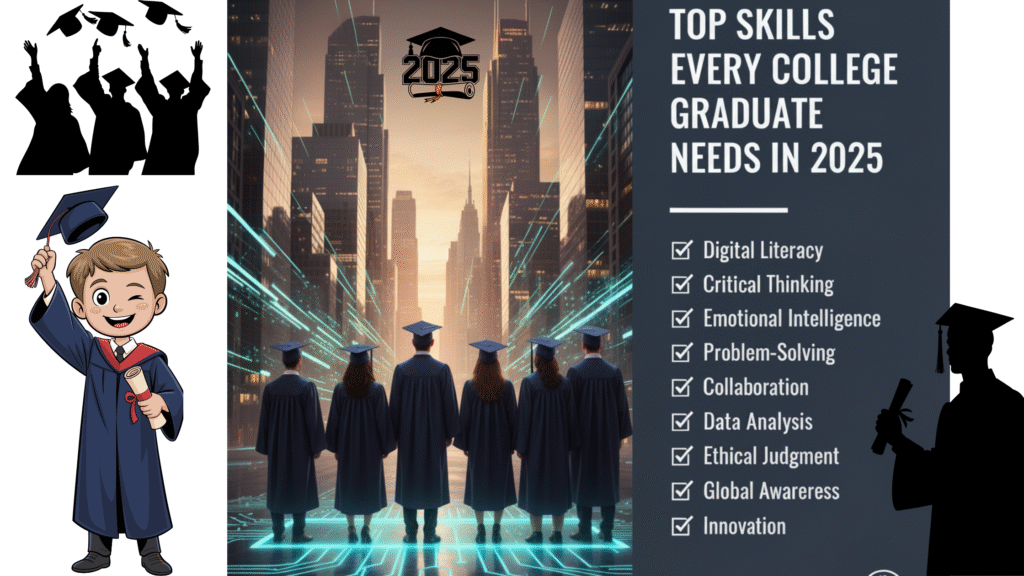
Graduating from college is exciting, but the real challenge often begins after you toss the cap in the air. The job market in 2025 is faster, smarter, and more tech-driven than ever before. Employers are looking for more than just a degree—they want graduates with skills that are practical, adaptable, and future-ready.
Whether you’re a liberal arts major, an engineer, or someone finishing business school, the skills you develop today will define how quickly you transition from student life to career success. In this guide, we’ll walk you through the essential skills every college graduate needs to thrive in 2025, how to acquire them, and why they matter.
1. Communication Skills: Beyond Emails and Presentations
Strong communication is always in demand, but in 2025, it’s not just about writing a good essay or giving a polished presentation. Modern workplaces need graduates who can:
- Articulate ideas clearly in virtual meetings and hybrid setups.
- Write professional emails that get results without wasting time.
- Engage diverse audiences—from global colleagues to clients from different industries.
- Active listening—understanding not just words but context and intent.
2. Digital Literacy: More Than Just Microsoft Office
In 2025, being “tech-savvy” isn’t enough. Employers expect graduates to:
- Master digital collaboration tools like Slack, Trello, Asana, and Zoom.
- Understand data basics—analyzing spreadsheets, interpreting charts, and spotting trends.
- Adapt to AI tools—from ChatGPT to specialized software in your field.
- Cybersecurity awareness—knowing how to protect sensitive data and avoid digital risks.
3. Critical Thinking and Problem-Solving
Degrees teach theory, but workplaces reward graduates who can think critically and solve real-world problems. This means:
- Breaking down complex challenges into manageable parts.
- Identifying patterns and connections others might miss.
- Making decisions based on evidence rather than assumptions.
- Learning from mistakes and iterating quickly.
4. Adaptability and Resilience
The post-pandemic workforce proved one thing: change is constant. Employers want graduates who can:
- Adjust to new technologies and workflows quickly.
- Take on diverse roles outside their comfort zones.
- Bounce back from setbacks without losing motivation.
5. Emotional Intelligence (EQ)
EQ is the ability to understand and manage your emotions—and those of others. In 2025, graduates who demonstrate EQ:
- Collaborate better in teams.
- Resolve conflicts efficiently.
- Influence and motivate colleagues without formal authority.
6. Leadership and Initiative
Leadership isn’t about titles; it’s about taking initiative. Employers seek graduates who:
- Volunteer for tasks that need solving.
- Mentor or help peers when needed.
- Step up in ambiguous situations without waiting for instructions.
7. Financial Literacy
Graduates often enter adulthood without a solid grasp of finances. In 2025, understanding money matters is crucial. Essential financial skills include:
- Budgeting and managing personal expenses.
- Understanding credit, loans, and interest rates.
- Planning for retirement—even small contributions compound over time.
- Basic investment knowledge.
8. Collaboration and Teamwork
Even in remote settings, teamwork is essential. Employers look for graduates who can:
- Communicate effectively within teams.
- Respect diverse perspectives and cultures.
- Navigate conflict and find compromises.
- Share credit and celebrate team wins.
9. Time Management and Productivity
College taught deadlines—but real-world productivity demands more:
- Prioritize tasks strategically.
- Avoid multitasking traps.
- Use tools like Trello, Notion, or Google Calendar for organization.
- Balance work, personal life, and continued learning.
10. Creativity and Innovation
Graduates who think creatively and propose innovative solutions stand out. Skills in creativity include:
- Brainstorming original ideas.
- Challenging existing processes without disrespect.
- Applying knowledge from one area to solve problems in another.
- Designing better workflows, products, or services.
11. Networking and Relationship Building
Who you know matters, but how you connect matters more. Key networking skills:
- Building genuine relationships, not just collecting contacts.
- Following up politely and consistently.
- Leveraging LinkedIn and other professional platforms effectively.
- Knowing when to offer help without expecting immediate returns.
12. Cultural Awareness and Global Perspective
Workplaces are increasingly global. Skills in cultural awareness:
- Respecting cultural differences in communication and etiquette.
- Understanding international business practices.
- Adapting messaging for diverse audiences.
13. Continuous Learning and Curiosity
The half-life of skills is shrinking. Graduates who stay curious:
- Take online courses to keep up with trends.
- Read industry publications and thought leadership blogs.
- Seek mentorship from professionals.
14. Technical Skills Specific to Your Field
While soft skills matter, technical expertise sets you apart. Depending on your career:
- STEM graduates: coding, data analytics, AI tools.
- Business graduates: Excel, CRM software, digital marketing tools.
- Arts/humanities graduates: multimedia, content management, research databases.
15. Problem-Solving Under Pressure
Deadlines, last-minute changes, and unexpected challenges are the norm. Graduates who thrive:
- Stay calm and focused under pressure.
- Break problems into actionable steps.
- Use critical thinking to find creative solutions quickly.
Helpful Resources :–
- LinkedIn Learning: https://www.linkedin.com/learning
- Coursera: https://www.coursera.org
- edX: https://www.edx.org
- U.S. Department of Labor: https://www.dol.gov