

Introduction
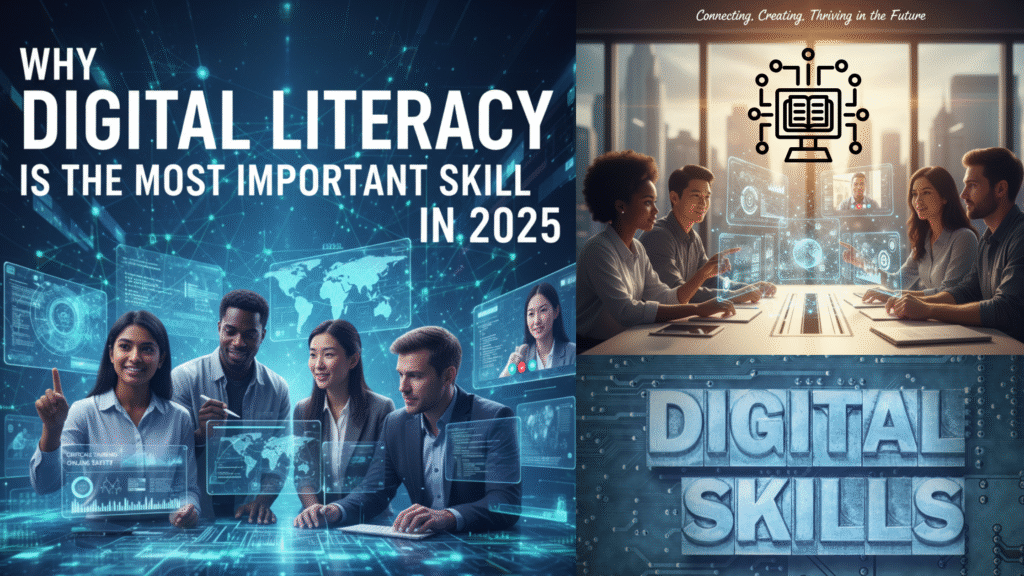
We live in an era where technology is not just part of life — it is life. From studying and shopping to working and communicating, everything now happens in the digital world. And for students in 2025, being digitally literate is no longer an “extra skill” — it’s a necessity.
Digital literacy is about more than just knowing how to use a computer or browse the internet. It’s the ability to think critically, use technology responsibly, and navigate online spaces safely and effectively. In short, it’s the new form of literacy that defines success in modern education and the professional world.
So, what exactly does digital literacy mean? Why is it so important for students today? And how can you develop it to stay ahead of the curve?
Let’s dive deep.
What Is Digital Literacy?
Digital literacy means having the skills to find, evaluate, create, and communicate information using digital technology. It’s about understanding how to use online tools not just efficiently, but smartly.
Think of it like this:
Traditional literacy is about reading and writing.
Digital literacy is about understanding, creating, and communicating in the online world.
It includes things like:
- Using search engines effectively
- Recognizing fake news and misinformation
- Communicating professionally online
- Understanding privacy, security, and digital ethics
- Creating digital content like presentations, videos, and blogs
In 2025, being digitally literate also means being AI-aware — knowing how to use tools like ChatGPT, Google Gemini, or Canva AI responsibly and creatively.
Why Digital Literacy Is Crucial for Students in 2025
The education system has changed dramatically over the last few years. Classrooms are now smart, lessons are interactive, and assignments are digital. Students who lack digital literacy struggle to keep up — not because they aren’t intelligent, but because the tools have changed.
Here’s why it matters more than ever:
1. Education Has Gone Digital
From submitting assignments on Google Classroom to attending virtual lectures, digital tools are everywhere. Even libraries have become digital archives. Without digital literacy, students risk falling behind their tech-savvy peers.
2. Jobs Require It
Nearly every job — from marketing to engineering — now involves some level of technology. Employers don’t just look for degrees anymore; they look for skills. Knowing how to use software, manage data, or even write professional emails can set you apart.
3. Prevents Misinformation
In an era of fake news, deepfakes, and AI-generated content, being able to evaluate what’s true and what’s not is an essential survival skill.
4. Encourages Responsible Digital Citizenship
Being online also means being visible. A single post can affect your digital reputation. Students must understand online ethics, cyber safety, and digital footprints.
5. Bridges the Global Learning Gap
Through digital literacy, students can connect with mentors, access global resources, and collaborate with peers from different countries — something that was impossible just a decade ago.
Key Components of Digital Literacy
Let’s break down what digital literacy really includes — it’s not just “tech skills”; it’s a mindset.
1. Information Literacy
Knowing how to find accurate, relevant, and trustworthy information.
Example: Being able to research using Google Scholar or PubMed instead of random blog sites.
2. Media Literacy
Understanding how media influences thoughts and behavior. Recognizing bias, propaganda, and manipulation online.
3. Communication Literacy
The art of expressing ideas clearly in digital formats — emails, social media, video calls, etc. Professional etiquette matters here.
4. Technology Literacy
Using different devices and applications — from Word and Excel to AI tools and cloud-based apps.
5. Digital Ethics & Safety
Respecting others’ privacy, avoiding plagiarism, and maintaining cybersecurity practices.
6. Creative Digital Skills
Being able to produce content — videos, infographics, presentations — that adds value. Creativity now has a digital language.
How Digital Literacy Impacts Education in the US
The United States has been at the forefront of digital education. By 2025, almost every major school and university integrates technology into its curriculum. Platforms like Google Workspace for Education, Khan Academy, and Coursera have become part of everyday learning.
Students now learn coding in middle school, submit assignments online, and collaborate in virtual study rooms. Teachers use AI tools to personalize lessons, track performance, and give real-time feedback.
However, this progress also highlights inequality. Students without access to devices or high-speed internet fall behind — known as the digital divide. Digital literacy, therefore, isn’t just about skills; it’s also about access and awareness.
To ensure equality, schools across the US are launching initiatives like:
- Free laptop distribution programs
- Internet subsidies for low-income students
- Workshops on cybersecurity and online ethics
Such programs don’t just teach students to use technology — they teach them to understand it.
Top Tools That Help Improve Digital Literacy
Here are some must-know tools every student should master in 2025:
| Category | Tools to Learn | Purpose |
|---|---|---|
| Productivity | Google Docs, Notion, Trello | Organize assignments & teamwork |
| Communication | Slack, Zoom, Microsoft Teams | Virtual collaboration |
| Research | Google Scholar, JSTOR | Finding credible academic sources |
| Creativity | Canva, Adobe Express, CapCut | Create digital content |
| Security | 1Password, VPN, Two-Factor Authentication | Online safety |
| AI Tools | ChatGPT, Grammarly, Perplexity.ai | Writing, editing, learning support |
Being familiar with these tools can make studying more efficient and future job tasks much easier.
How to Develop Digital Literacy Skills (Step-by-Step)
If you’re a student who wants to level up your digital literacy, here’s a simple action plan:
1. Start Small
Begin with everyday tools — email, cloud storage, and document editors. Learn shortcuts, formatting, and file management.
2. Take Free Courses
Platforms like Coursera, edX, and Google Digital Garage offer free certified courses on basic and advanced digital skills.
3. Practice Safe Internet Habits
Always check website credibility (look for “https”), use strong passwords, and never overshare personal information online.
4. Stay Updated
Tech changes fast. Follow education tech blogs or YouTube channels to learn about new tools and features.
5. Collaborate Digitally
Work on group projects using shared online tools like Google Drive, Notion, or Microsoft Teams.
6. Create Your Own Digital Portfolio
Show your work — a blog, a small coding project, or a presentation. Employers love proof of skills, not just words on a resume.
Real-World Examples of Digital Literacy in Action
- Case 1: A student in California learned video editing through YouTube and Canva. Within six months, she started freelancing and now earns enough to pay her tuition.
- Case 2: During the pandemic, schools in Texas trained teachers and students on Microsoft Teams — that digital shift helped improve attendance by 40%.
- Case 3: A college in New York integrated AI writing assistants into its curriculum, teaching students how to use them ethically rather than banning them.
These examples prove that digital literacy isn’t just a buzzword — it’s a skill that transforms opportunities.
Challenges in Promoting Digital Literacy
While progress is visible, challenges still exist:
- Digital Divide: Not all students have equal access to technology.
- Misinformation: Social media spreads false news quickly.
- Privacy Risks: Data theft and online scams are increasing.
- Overdependence: Students sometimes rely too much on AI tools instead of thinking critically.
To overcome these, schools must combine technology education with moral education — teaching not only how to use digital tools, but how to use them responsibly.
The Future of Digital Literacy (Beyond 2025)
By 2030, experts predict that digital literacy will become as fundamental as reading and math. AI and automation will handle many routine tasks, but creativity, digital awareness, and critical thinking will still require human intelligence.
Students who embrace digital learning today are preparing for careers that don’t even exist yet — in AI ethics, virtual education design, or cybersecurity analysis.
The message is clear: Digital literacy is not optional anymore — it’s the new foundation of success.