

📝 Introduction
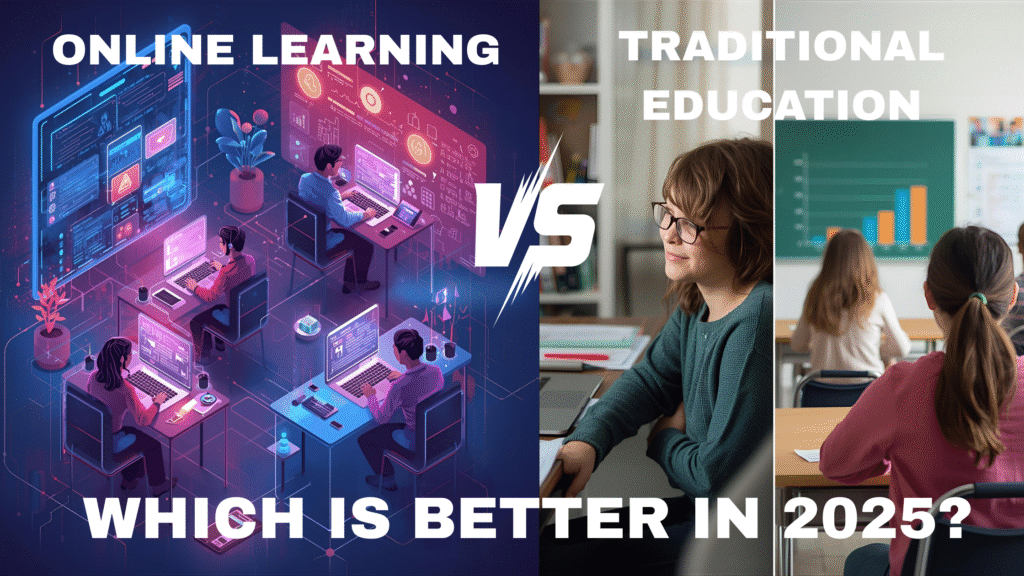
Education has always been the backbone of society. From ancient gurukuls to modern universities, the way we learn has constantly evolved. However, in the last decade, a major revolution has taken place in education: the rise of online learning. The debate of “Online Learning vs Traditional Education” has become one of the hottest topics among students, parents, and educators worldwide.
But here’s the real question: Which one is better in 2025? Should students stick to traditional classrooms, or is online education the smarter choice in today’s digital age?
In this article, we’ll explore both sides of the argument in detail. We’ll cover their advantages, disadvantages, long-term impacts, and what the future of education looks like. By the end, you’ll have a clear idea of which method suits you best.
What is Traditional Education?
Traditional education refers to the age-old classroom learning model where students attend school, college, or university in person. The setup includes:
- Face-to-face interaction with teachers
- Structured schedules and timetables
- Physical classrooms with blackboards, desks, and libraries
- Social interaction with peers
This system has been in place for centuries and is still considered the “standard” form of education in most parts of the world.
What is Online Learning?
Online learning, also known as e-learning or digital education, is the process of studying through the internet. Students can access lectures, assignments, and resources from anywhere using a computer, tablet, or smartphone.
Examples of online learning platforms:
- Coursera
- Udemy
- Khan Academy
- BYJU’s
- edX
Online education can be synchronous (live classes on Zoom/Google Meet) or asynchronous (pre-recorded video lessons, e-books, and self-paced courses).
Benefits of Traditional Education
Even in 2025, traditional learning holds a strong place.
1. Direct Teacher Interaction
Students can ask questions instantly and get feedback in real-time. This makes learning more engaging and effective.
2. Social Development
Classrooms provide opportunities to make friends, work in groups, and develop teamwork and communication skills.
3. Structured Learning Environment
Schools and colleges follow a fixed routine. This discipline helps students stay consistent and avoid procrastination.
4. Extracurricular Activities
From sports to debates, cultural fests to workshops, traditional institutions provide a holistic learning environment that goes beyond books.
5. Recognition and Value
Many employers still value traditional degrees more because of their authenticity and credibility.
Benefits of Online Learning
Now let’s look at why millions of students prefer online education today:
1. Flexibility
You can study anytime, anywhere. Perfect for working professionals or students balancing multiple responsibilities.
2. Cost-Effective
No need to spend money on travel, accommodation, or expensive textbooks. Many online courses are free or affordable.
3. Access to Global Resources
Students can learn from top universities like Harvard, Stanford, or IITs without leaving their homes.
4. Self-Paced Learning
Everyone learns at a different speed. Online learning allows students to rewind lectures, pause when needed, and move forward when ready.
5. Skill-Oriented Courses
Many platforms offer short-term, skill-based courses (like coding, digital marketing, or graphic design) that can directly help in jobs or freelancing.
Drawbacks of Traditional Education
While traditional classrooms have benefits, they also come with challenges:
- Limited flexibility – Students must follow strict schedules.
- High cost – Tuition fees, hostel charges, and other expenses make it expensive.
- Geographical barriers – Students in remote areas may struggle to access good schools or colleges.
- One-size-fits-all teaching – Not every student learns at the same speed, but classrooms often move forward together.
Drawbacks of Online Learning
Online education also has its fair share of limitations:
- Lack of face-to-face interaction – Students may feel isolated.
- Distractions – Studying from home can lead to lack of focus due to social media, gaming, or family interruptions.
- Practical limitations – Hands-on subjects like medicine, engineering, or sports cannot be fully taught online.
- Quality concerns – Not all online courses are certified or recognized by employers.
- Digital divide – Students without internet access or devices are left behind.
Online Learning vs Traditional Education: Head-to-Head Comparison
| Feature | Traditional Education | Online Learning |
|---|---|---|
| Flexibility | Low | High |
| Cost | Expensive | Affordable |
| Social Interaction | Strong | Limited |
| Teacher Support | Direct & Immediate | Delayed (emails/forums) |
| Global Access | Limited | Unlimited |
| Practical Training | Strong | Weak |
| Self-Paced Learning | No | Yes |
What Students Say (Real-Life Insights)
- College students: Many believe traditional education is better for networking and placements.
- Working professionals: Prefer online courses for upskilling without leaving their jobs.
- Parents: Trust traditional schools for discipline but appreciate online tuition for flexibility.
Study Hacks :Top 10 Study Hacks for US College Students in 2025
The Future of Education in 2025 and Beyond
So, what does the future look like?
The answer is blended learning – a mix of both. Experts believe the best education model is where students attend physical classes but also use online platforms for extra learning. For example:
- A medical student attending lectures in college while also using online 3D anatomy apps.
- A business student joining in-person internships but learning advanced Excel or AI marketing tools online.
This hybrid system ensures students get the best of both worlds – structure + flexibility.
According to a report by the U.S. Department of Education, online course enrollment has steadily increased over the past decade: Link